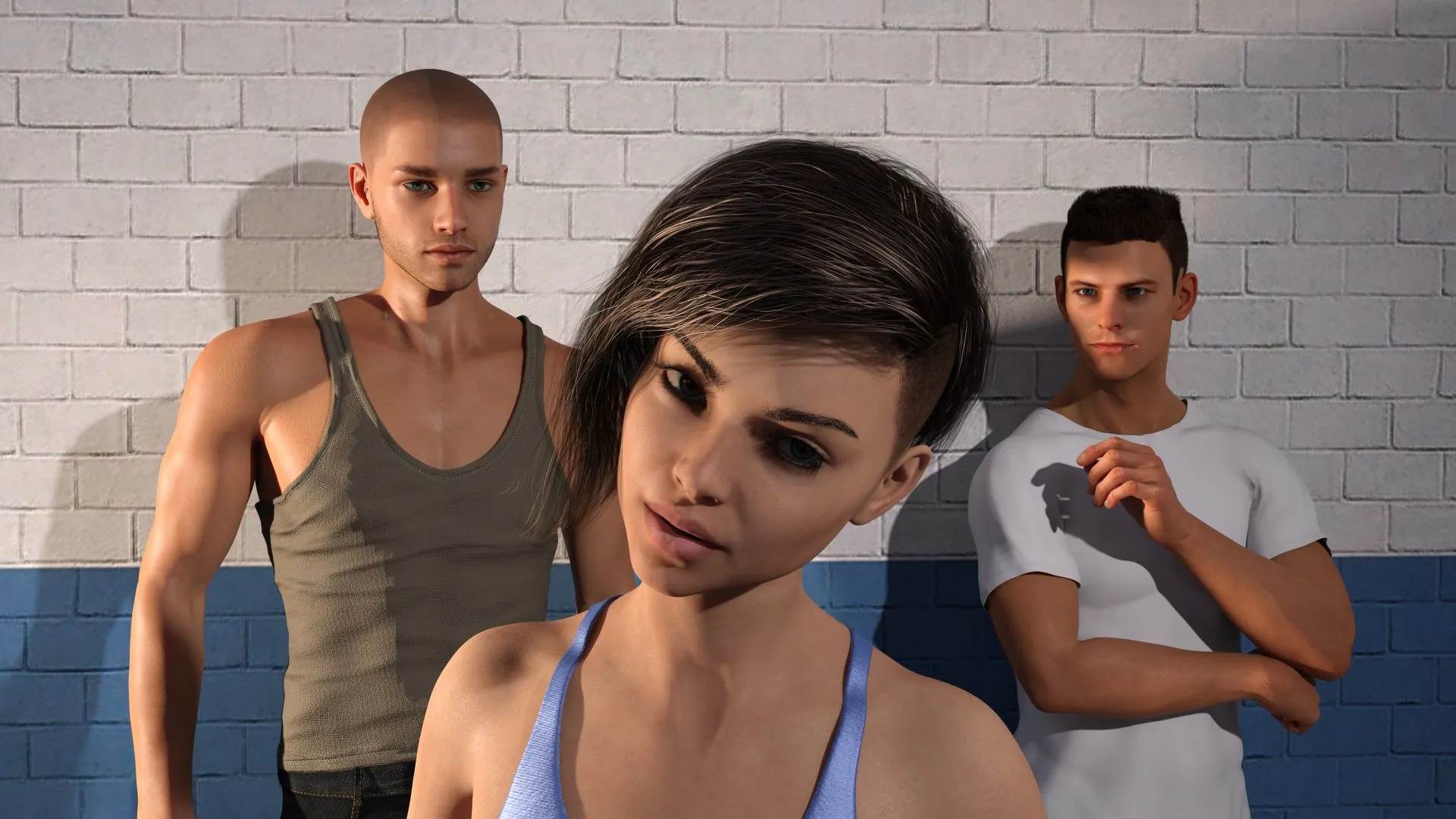
Summer’s Gone
Play Summer’s Gone
Summer’s Gone Screenshots












Summer’s Gone review
Explore storytelling, character development, and branching narratives in this emotional adventure game
Summer’s Gone stands as a compelling interactive visual novel that captivates players through its emotionally-driven narrative and complex character relationships. Set in a university environment, this story-driven adventure game invites players to accompany a traumatized protagonist through a transformative journey of personal growth and emotional healing. With its emphasis on meaningful choices, deep character development, and multiple branching storylines, Summer’s Gone delivers an immersive experience that resonates with players seeking narrative-rich gaming. Whether you’re drawn to romance elements, psychological depth, or the exploration of human relationships, this game offers a unique blend of interactive storytelling and profound life-changing themes that encourage multiple playthroughs and emotional investment.
Understanding Summer’s Gone: Core Gameplay and Story Elements
So, you’ve downloaded Summer’s Gone, the interactive visual novel that’s been lighting up forums and pulling at heartstrings. You’re ready to dive in, but maybe you’re wondering: what exactly sets this experience apart from a million other story-based games? 🤔 If you’re like I was, you might be expecting a simple, linear tale. What you get instead is a profound, emotional storytelling game that asks you to sit with discomfort, make tough calls, and live with the consequences. It’s less about “winning” a romance and more about navigating the messy, beautiful process of healing.
At its core, Summer’s Gone is an exploration of a fractured psyche. You step into the shoes of a young man entering university, not with the typical excitement of a fresh start, but burdened by a trauma so deep it has stripped the color from his world. His “summer” is gone—both literally and metaphorically—and your journey is about what comes after. This isn’t a standard university dating simulation; it’s a slow, careful reconstruction of a person. The relationships you form are the scaffolding for that rebuild, making every conversation feel weighted and real. The Summer’s Gone gameplay mechanics are designed not to challenge your reflexes, but your empathy and judgment.
What Makes Summer’s Gone a Standout Interactive Experience
Forget everything you think you know about visual novels. 🚫 While many offer choices, Summer’s Gone implements its branching narrative choices with a surgical precision that genuinely shapes your reality. It’s not about picking the “nice,” “funny,” or “bold” response to rack up points. It’s about choosing how a wounded person would react in painfully authentic situations. Will you shut down a kind gesture, too numb to accept help? Or will you muster the courage to be vulnerable, just for a moment?
This is where the Summer’s Gone interactive visual novel framework shines. The game masterfully uses its interactive nature to create intimacy and tension. Some of the most powerful scenes aren’t grand declarations, but silent moments where you simply choose to look at a character, or listen to the rain. The game understands that what we don’t say can be as important as what we do. I remember one early playthrough where I, trying to be the “strong, silent type,” consistently pushed a character away. I didn’t get a “game over” screen; instead, I watched the relationship atrophy naturally, with her eventually giving up and moving on. It felt devastatingly real.
The emotional storytelling game aspect is amplified by a “slow-burn” approach that I absolutely adore. ❤️🔥 In a genre often criticized for instant connections, relationships here take time, sometimes months of in-game time. Trust is earned, not given. A meaningful glance in chapter three is only possible because of a small, seemingly insignificant choice you made in chapter one. This design philosophy makes every breakthrough feel earned and incredibly satisfying. It transforms the experience from a game into a shared, lived-in story.
The University Setting and Character Cast
The university setting is a character in itself. 🏛️ It’s not just a backdrop for romance; it’s a symbol of a future the protagonist isn’t sure he wants. The lecture halls, dorm rooms, and local cafés become the stage for his re-entry into life. This environment allows the story to explore themes of academic pressure, cultural exchange, and the unique loneliness of being surrounded by people while feeling completely isolated. It’s the perfect Petri dish for the character development visual novel fans crave.
Central to this journey are three women, each representing a different path forward, a different color trying to seep back into the protagonist’s gray world. They are not trophies to be collected, but fully realized individuals with their own baggage, dreams, and complexities. Your choices don’t just affect your relationship with them; they affect their lives and how they view themselves.
To help you get acquainted, here’s a breakdown of the central trio:
| Character | Background & Personality | Relationship Dynamic |
|---|---|---|
| Luo Xue’er 🇨🇳 | A driven Chinese international student, focused on her studies and future. She is disciplined, intelligent, and carries the quiet weight of family expectations. | Represents stability and shared ambition. Connecting with her is about finding common ground in purpose and building a partnership based on mutual respect and quiet understanding. |
| Laya 🗝️ | The enigmatic landlady who owns the apartment complex. Older and more worldly, she is observant, mysterious, and possesses a deep, calming presence. | Offers a connection outside the university bubble. This relationship is about mentorship, deep conversation, and a safe harbor from the storm of the protagonist’s inner turmoil. |
| Inora 🇳🇴 | A Norwegian student in China to learn the language. She is energetic, openly emotional, and approaches life with a fearless, sometimes chaotic, curiosity. | Embodies spontaneity and emotional honesty. She challenges the protagonist to feel again, pulling him out of his shell through sheer force of personality and unfiltered expression. |
Interacting with these characters is the heart of the Summer’s Gone gameplay mechanics. You’ll navigate cultural nuances with Luo Xue’er, unravel subtle mysteries with Laya, and ride the emotional rollercoaster with Inora. The game forces you to consider not just “what do I want to say?” but “who does this person need me to be right now, and is that someone I can become?” 🤯 This depth is what makes it a premier character development visual novel.
Narrative Structure and Multiple Endings
The genius of Summer’s Gone lies in its architecture. The story begins not with a “hello,” but with an implicit “goodbye”—to the past, to a former self. Over a six-month timeframe, you inhabit the protagonist’s recovery day by day. The narrative isn’t a straight line; it’s a sprawling tree where every branch represents a possibility born from your decisions. This is the essence of its branching narrative choices.
Major plot points, key revelations, and intimate scenes are often locked behind specific emotional thresholds or dialogue sequences. You might need to have shown consistent patience with one character to unlock a scene where they confide their deepest fear. Or, choosing to spend a rainy afternoon alone might close off an opportunity for a group outing that leads to a crucial bonding moment. It creates an incredible incentive for replayability. On my second playthrough, I discovered entire scenes and character backstories that I had no idea existed, simply because I had chosen a different emotional posture at the start.
This all builds toward the game’s crowning achievement: its multiple endings visual novel system. We’re not just talking about “good,” “bad,” and “neutral” endings tagged onto the final scene. The endings in Summer’s Gone are organic culminations of your entire journey. They reflect not just who you ended up with, but who you became in the process.
Tip: Don’t savescum! The most authentic and rewarding way to experience this emotional storytelling game is to commit to your choices and see where they lead, even if it’s painful. The story’s emotional weight comes from its permanence.
Will you find healing and open your heart to a future with someone? Will you learn to be content with your own company, finding peace in solitude? Or will the weight of the past prove too much, leading to a more melancholic conclusion? Each ending feels valid and earned, a direct commentary on the path you walked. Achieving a specific ending requires you to understand the characters and make choices that align with a coherent emotional arc, making the Summer’s Gone interactive visual novel a deeply personal experience.
Beyond dialogue, the Summer’s Gone gameplay mechanics include thoughtful interactive elements that break up the narrative pacing. Occasional puzzles or logic-based sequences are never just filler; they’re thematically tied to the protagonist’s state of mind—solving a puzzle can mirror the process of untangling a repressed memory. These moments provide a tactile engagement that reinforces the story’s themes of piecing things back together.
It’s also important to address the mature nature of the story. This game carries a 17+ or 18+ rating (depending on your region) for a reason. It deals unflinchingly with themes of trauma, depression, and complex adult relationships. The emotional content is heavy and authentic. It’s not for everyone, but for its target audience—players seeking a mature, narrative-driven experience—it is unparalleled. Furthermore, the game is a living project, with the developers committed to periodic content updates that introduce new chapters and deepen existing character arcs, meaning the story you invest in continues to grow.
Frequently Asked Questions
What are the main themes of Summer’s Gone?
The game is a deep dive into emotional storytelling, centered on themes of profound loss, the slow and non-linear journey of personal growth, and the complexity of human relationships. It explores how we heal (or fail to heal) from trauma and how connections with others can be both a salve and a challenge.
Is this just a dating sim?
While relationships are central, calling Summer’s Gone just a university dating simulation sells it short. The romantic elements are woven into a larger narrative about healing. The focus is on emotional connection and personal development, with relationships unfolding through a deliberate slow-burn mechanic that prioritizes authenticity over quick gratification.
What should I know about the mature content?
The game is rated for mature audiences (17+/18+) due to its heavy psychological themes. It deals directly with trauma, emotional distress, and complex adult situations. The content warning is there for players’ emotional well-being—this is an intense, emotional storytelling game designed for those prepared to engage with difficult subject matter.
How do the multiple endings work?
The multiple endings visual novel system is deeply integrated into the branching narrative choices you make from the very beginning. Endings are determined by your cumulative relationship values, key story decisions, and the overall emotional direction you guide the protagonist toward. There is no single “correct” path, leading to high replay value.
How often is the game updated?
The developers release substantial periodic content updates that expand the story with new chapters and character arcs. This means the world and narratives of Summer’s Gone continue to evolve, offering players new reasons to return and explore different branching narrative choices over time.
In the end, Summer’s Gone is more than a game; it’s an experience in empathy and consequence. Its powerful blend of character development, meaningful branching narrative choices, and mature emotional storytelling sets a new bar for what the interactive visual novel format can achieve. It asks for your patience and emotional investment and, in return, offers a story that can stay with you long after you’ve seen the credits roll. Whether you’re drawn to the intricate Summer’s Gone gameplay mechanics or the promise of a deeply personal tale, this journey into a faded summer is one worth taking.
Summer’s Gone represents a sophisticated approach to interactive storytelling, combining emotionally resonant narratives with meaningful player agency. Through its complex character relationships, branching storylines, and emphasis on personal growth and healing, the game creates an experience that transcends typical visual novel conventions. The careful balance between player choice and narrative coherence, coupled with the slow-burn romance mechanics and psychological depth, makes Summer’s Gone a compelling choice for players seeking immersive, emotionally engaging gaming experiences. Whether you’re drawn to the university setting, the exploration of human relationships, or the themes of loss and personal transformation, Summer’s Gone offers a rich, replayable experience that rewards emotional investment and thoughtful decision-making. For those seeking narrative-driven games that prioritize character development and meaningful storytelling, Summer’s Gone stands as a testament to the potential of interactive fiction to explore complex human experiences.