
Love Season: Farmer’s Dreams
Play Love Season: Farmer’s Dreams
Love Season: Farmer’s Dreams Screenshots

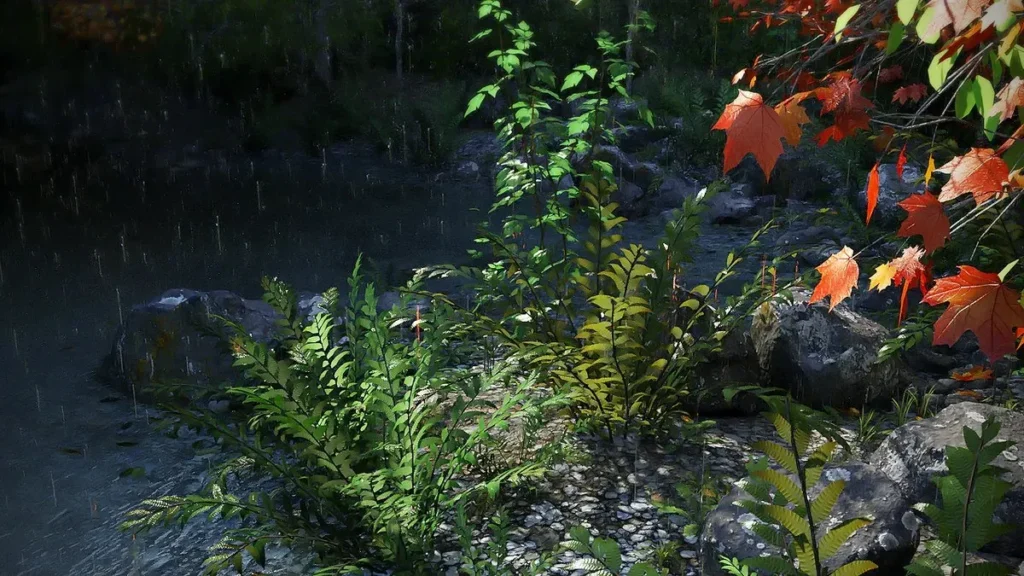




Love Season: Farmer’s Dreams review
Complete strategies, tips, and progression paths for mastering the farming simulation experience
Love Season: Farmer’s Dreams offers players an immersive blend of farming simulation and relationship-building mechanics. Whether you’re new to the game or looking to optimize your playthrough, understanding the core systems—from crop management to character interactions—is essential for success. This guide covers everything you need to know to build a thriving farm while navigating the game’s intricate relationship dynamics and story branches. Learn how to maximize your harvests, unlock special events, and experience all the content this engaging simulation has to offer.
Getting Started: Farming Fundamentals in Love Season
So, you’ve just arrived in the peaceful village, your heart full of dreams and your pockets… well, mostly full of dust. The field before you is a beautiful, intimidating mess of weeds and potential. I remember staring at that same patch of land, feeling totally overwhelmed. Where do you even start? Do you buy seeds, clear the whole field, or run around talking to everyone first? 🤔
Worry not, fellow dreamer! This Love Season Farmer’s Dreams farming guide is here to turn that overwhelm into a clear, profitable plan. Getting your farm humming is the engine that drives everything else—your relationships, your home upgrades, and your story. Let’s break down the absolute fundamentals, so you can build a thriving homestead that fuels all your other adventures.
Understanding the Farming System and Crop Management
At its heart, farming in Love Season: Farmer’s Dreams is a delightful dance with the calendar. Unlike some games where you plant once and forget, here, seasonal farming mechanics are everything. Each season (Spring, Summer, Fall, and the gentle Winter) offers a unique set of crops that will only grow in that specific time window. Planting a Summer tomato in Fall? It simply won’t sprout. 🌱
The core loop is simple but deep: till the soil, plant a seed, water it daily, and harvest when ready. But the magic—and the profit—lies in mastering the timing. Every crop has a specific growth time, listed in days. This is where a smart crop management strategy comes into play. You can’t just plant everything on the 1st of the season and hope for the best.
This brings us to the single most important tip I can give you: succession planting. This is the practice of staggering your sowings so that your harvests are spread out, not clustered on one back-breaking day. For example, if Radishes take 4 days to grow, don’t plant 100 seeds on Monday. Plant 25 on Monday, 25 on Tuesday, and so on. This creates a rolling harvest that gives you a steady stream of income and goods for shipping or gifting every single day. My first season, I made the classic mistake of planting all my potatoes at once. I spent one glorious day drowning in potatoes and then had nothing to do for the rest of the week. Don’t be like past me!
Watering is your daily commitment. Your energy bar is a precious resource, especially early on. Focus on clearing and planting only as much land as you can reliably water each morning. It’s better to have a small, well-tended plot than a huge, parched field of dead sprouts.
| Crop | Season | Growth Time (Days) | Profit Per Crop (Approx.) | Notes |
|---|---|---|---|---|
| Turnip | Spring | 4 | Low | Perfect for early cash and quick succession cycles. |
| Potato | Spring | 6 | Medium | Has a chance to yield multiple potatoes per plant. |
| Cabbage | Spring | 9 | High | Longer grow time but great for a big mid-season payout. |
| Tomato | Summer | 8 | High | Keeps producing after the first harvest! A superstar crop. |
| Corn | Summer | 12 | Medium | Grows in both Summer and Fall. Another regrowing staple. |
| Pumpkin | Fall | 13 | Very High | A long investment, but the payoff is massive. |
Essential Resources and Early-Game Progression
Your opening days are all about smart resource management and establishing a rhythm. You start with very little gold and a basic set of tools. The key is to prioritize actions that set up future growth. Your two main resources are Energy and Gold, and they are deeply connected. You spend energy to make gold, and you spend gold on items (like better food) to recover more energy. It’s a beautiful, sometimes stressful, cycle!
Here’s my battle-tested, step-by-step checklist for nailing your early game progression:
- Day 1-3: Foundation Week. Clear a small, manageable patch of land—maybe 5×5 or 6×6 tiles. Don’t exhaust yourself! Use your starting funds to buy the fastest-growing seeds (like Turnips). Plant them immediately with your succession planting tips in mind. Use the rest of your energy to forage for wild items like herbs and flowers. Sell everything you don’t need at the shipping bin before you go to sleep. Every gold piece counts.
- First Income & First Upgrade. Your first harvest is a milestone. Reinvest almost all of it back into your farm. Your top priority should be upgrading your watering can. This is the single biggest quality-of-life improvement. A better can waters more tiles per action, saving you enormous amounts of energy every single day. This is the cornerstone of farm optimization.
- Unlock the Kitchen. As soon as you can, focus on upgrading your house to unlock the kitchen. Why? Cooking is the best resource management tool in the game. A simple cooked dish often restores far more energy than its raw ingredients ever could. Foraged berries are okay, but a berry pie is fuel for a full day of work.
- Diversify Slowly. Once you have a steady income from your first crops, start experimenting with one or two different seed types. Refer to the crop table and mix in something with a medium growth time. Always keep an eye on the calendar—you don’t want to plant something with a 10-day growth time on the 20th of the season!
Pro Tip: Don’t neglect the community center or its equivalent story-building structure! Bundles or offering requests often reward you with incredible items, recipe books, and even tool upgrades that can massively accelerate your early game progression.
Remember, the goal of this phase isn’t to become a millionaire. It’s to build a self-sustaining engine. You want your farm to generate enough daily gold to buy more seeds, better food, and eventually, those all-important tool upgrades, without you having to scrape by on foraging alone.
Optimizing Your Farm Layout for Maximum Efficiency
Once you’re past the initial scramble, it’s time to think about the big picture. Farm optimization isn’t about cramming every square inch with plants. It’s about designing a layout that saves you time, energy, and steps, giving you more freedom to explore, socialize, and enjoy the “Love” part of Love Season! ✨
My first farm was a chaotic nightmare. My crops were in a checkerboard pattern, my scarecrows were hidden behind trees, and I had to run a marathon just to water everything. Learn from my errors!
- Think in Blocks, Not Blobs. Organize your crops into neat, rectangular blocks. This makes watering with an upgraded can incredibly efficient, as you can water multiple tiles in a straight line. It also makes planning crop rotations much easier. Leave a one-tile path around each block so you can walk and harvest without trampling your precious plants.
- Strategic Scarecrow & Sprinkler Placement. You’ll unlock scarecrows to protect your crops and, later, sprinklers to automate watering. Plan for them! Place scarecrows in the center of a block to maximize their coverage. When you get your first basic sprinklers, design your crop blocks to fit their watering pattern (e.g., a 3×3 grid with the sprinkler in the middle). This forward-thinking is the heart of a long-term crop management strategy.
- The Automation End-Game. As you progress through tool upgrades and the story, you’ll unlock higher-tier automation. Advanced sprinklers, maybe even helpers—these are game-changers. When planning your final layout, dedicate specific zones for different purposes: a large, sprinkler-irrigated field for mass-producing your most profitable seasonal crops; smaller, hand-watered plots for specialty or regrowing crops; and space for trees, which produce fruit continuously once mature but take up permanent space.
- Accessibility is Key. Place chests for storing tools, seeds, and fertilizer near your field entrances. Keep a shipping bin nearby. Wasting half your morning running from your field to your storage shed is lost energy. A well-organized farm is a profitable farm.
Ultimately, the best farm optimization is the one that suits your playstyle. Do you want to min-max every gold piece? Then your layout will be a dense grid of calculated profit. Do you want a picturesque, charming homestead with room for decorations and animals? Design with beauty in mind. The tools and strategies in this Love Season Farmer’s Dreams farming guide give you the foundation to build either—or your own perfect mix.
Mastering these seasonal farming mechanics and resource management principles transforms the game. What starts as a daily chore becomes a satisfying, rhythmic puzzle. You’ll watch the seasons turn, your fields bursting with coordinated color, and your bank account growing steadily—all because you planted the right seed, on the right day, with a smart plan. Now, with your farm running like clockwork, you’ll have all the time and resources you need to focus on the other wonderful dreams waiting for you in the village. Happy farming
Love Season: Farmer’s Dreams successfully combines farming simulation with meaningful relationship dynamics, creating a rich gameplay experience that rewards both strategic planning and thoughtful character interaction. By mastering the farming fundamentals—from succession planting to resource optimization—you establish the economic foundation necessary to pursue relationship goals and unlock special content. The relationship system adds depth through branching narratives and character-specific interactions that make each playthrough unique. Whether you’re focused on building the most profitable farm or experiencing every relationship storyline, the strategies outlined in this guide provide the framework for success. Take your time exploring different approaches, experiment with various character paths, and enjoy the journey of building your ideal farm and relationships in this engaging simulation.